The publication last week of the catalogue of Pierre de Fermat highlights the growing body of early modern mathematical correspondences that is taking shape at present within EMLO. Fermat was one of the finest mathematicians of his age who rekindled interest in number theory. Through the exchange of letters he both initiated and participated in debates with contemporaries across Europe, including John Wallis in Oxford and Marin Mersenne in Paris.
Mathematical symbols. (Source of image: Wikimedia Commons)
During the first phase of the Cultures of Knowledge project a calendar was compiled for the correspondence of John Wallis, taken from Philip Beeley and †Christoph J. Scriba’s ongoing multi-volume edition published by Oxford University Press (volume IV was brought out last year), and this, in combination with our founding catalogues, became a cornerstone of the fledgling union catalogue that was to become EMLO. Within this past year, EMLO has seen metadata added for the correspondences of Christiaan Huygens, René Descartes, Athanasius Kircher, and Marin Mersenne, while the correspondence of Caspar Schott has been published in part and is due to be augmented significantly within the next couple of months by Thomas E. Conlon and Hans-Joachim Vollrath.
EMLO could not be more fortunate that this burgeoning cluster of mathematical correspondence is overseen by none other than Philip Beeley, the current President of the British Society for the History of Mathematics. With funding from the AHRC, Philip works at present on the seventeenth-century mathematical intelligencer John Collins, a project he drafted originally with the late Jackie Stedall. A catalogue of Collins’s letters is in preparation for upload to EMLO, where — thanks to Philip’s indefatigable work in a number of Scottish archives during the summer — it is to be joined by the catalogues of the correspondences of James and David Gregory, which our Digital Fellow Kat Steiner, herself a former student of Jackie’s, is set to help prepare. We are thrilled also to announce that work has just begun here in Oxford in partnership with the Bernoulli Euler Zentrum in Basel to prepare calendars for the correspondences of members of the illustrious Bernoulli family [Daniel I (1700–1782), Jacob II (1759–1789), Johann I (1667–1748), Johann II (1710–1790), Nicolaus I (1687–1759), Nicolaus II (1695–1726), and Jacob Hermann (1678–1733)], as well as for that of Leonhard Euler, and with her particular brief to help with work on the latter we would like to welcome to our EMLO Digital Fellow team doctoral student and Euler scholar Rosanna Cretney.
With this work in train, it will not be long before long we shall be in a position to mount a dedicated online exhibition and enable scholars to look closely at the intersections and overlaps of these mathematical networks that are taking shape. This is an exciting time for the history of mathematics, which is seeking to realign itself within the broader spheres of the history of science and intellectual history. As he celebrates his birthday this weekend, we would like (in addition to wishing him a heartfelt ‘Happy Birthday’!) to thank Philip for his tireless work behind the scenes for EMLO and, by way of a virtual present, to quote here Isaac Barrow’s observation that in mathematics we find ‘the unshaken Foundation of Sciences, and the plentiful Fountain of Advantage to human affairs’. Perhaps Barrow is clamouring now for Philip’s attention and lining up to be next in this impressive table of EMLO’s mathematical greats …

 the
the 
 We could not be more delighted to announce today’s publication in EMLO of a fascinating sixteenth-century correspondence catalogue: that of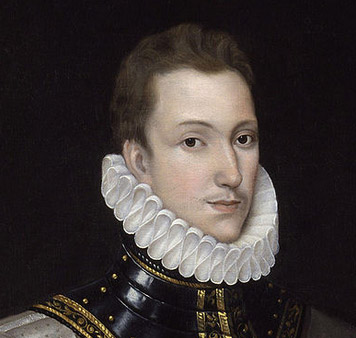
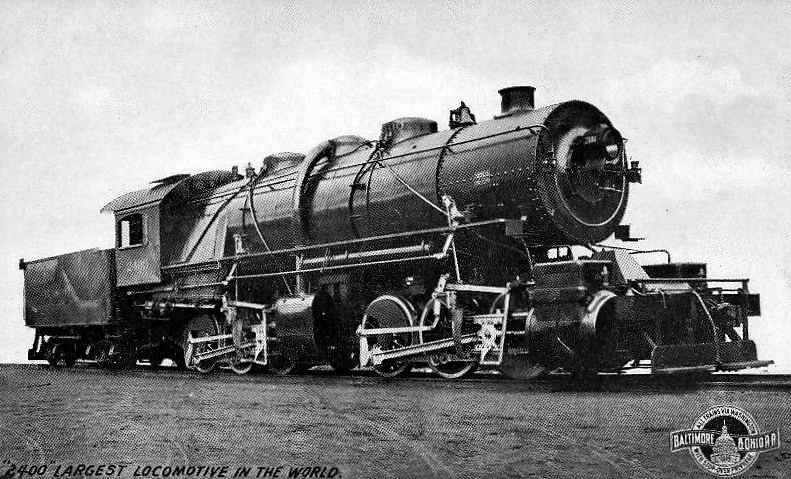
 For those readers who can scarcely imagine Cultures of Knowledge without Lizzy in the driver’s seat, it is my sorrowful duty to confirm the implication of this opening paragraph: yes, our friend and colleague, Lizzy Williamson, has headed west for a life in the New World. Oxford to Baltimore is a difficult commute and so, armed with her green card, Lizzy has taken the decision to move continents and to settle with her husband in Maryland.
 Once again, CofK seems to have attracted just the person it needs to confront a new set of challenges. For six years before his recent period as Digital Humanities Research Associate in the Research and Development Department of Göttingen State and University Library, Arno was Director of Technology in the Humanities Division at the University of Chicago. Only a few weeks into his new post and it is already crystal clear that the wealth of experience obtained in these roles equips him admirably for confronting the unprecedented technical challenges of growing EMLO into a collaboratively designed, built, and populated resource.
 who joins us to combine the dual roles of CofK and COST Administrators. With significant experience in event management and administration, we consider ourselves extremely fortunate that Dobrochna has settled into her crucial seat to enable this invaluable link between the two projects to be created. It may be ‘All Change’ at present the length of the train, but our long term destination remains steadfast ahead, and we would like once again to thank all past and present staff for travelling with us down this particular track.
 is available for consultation in the front end of EMLO. This publication marks a significant milestone in the history of Cultures of Knowledge and we could not be more pleased to share with you records for 3,696 manuscript letters (from what will be an eventual total of more than 4,500) contributed by our esteemed partner, the